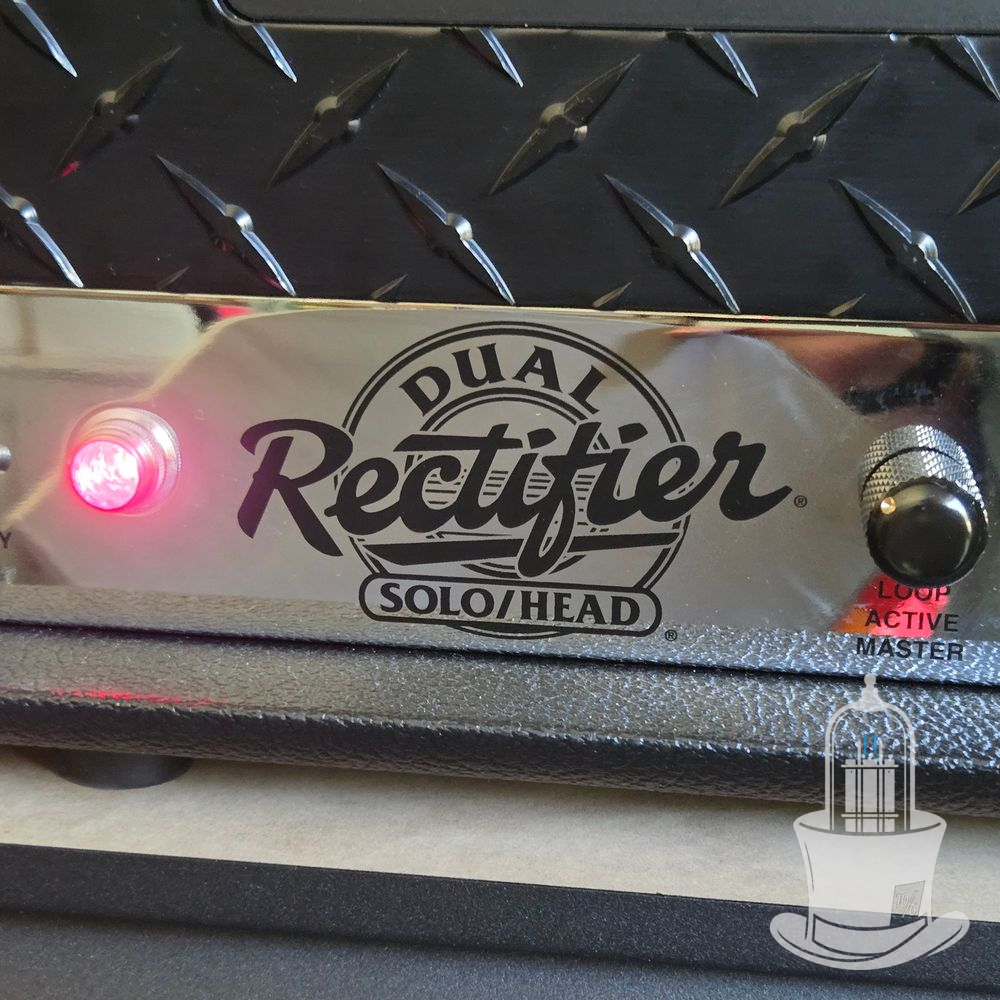
Mesa 90s Dual Rectifier Reissue - Full NAM Capture Pack
Mesa 90s Dual Rectifier Reissue - Full NAM Capture Pack
Couldn't load pickup availability
Mesa 90s Dual Rectifier Reissue - Full NAM Capture Pack
The Mesa/Boogie 90s Dual Rectifier is a faithful reissue of the defining high-gain amplifier of the late 90s and 2000s. It continues to be an iconic sound. This reissue is all of that and more than one aggressive rhythm sound.
This complete Mad Hatter Amp Lab collection captures a completely stock 2024 Mesa/Boogie 90s Dual Rectifier Reissue across 68 calibrated NAM A2 profiles: 34 DI captures and 34 matching full-rig versions.
The pack moves from the Orange channel’s Clean voice through Orange Vintage, Orange Modern, Red Vintage, and Red Modern. It includes variations using Bold and Spongy power modes and tube and diode rectification, giving you access to the different attack, feel, sag, and response available from the amp. Selected models were also captured with a Maxon OD808, MXR Super Badass Modified Overdrive, or Boss SD-1 running into the front end. Boosted captures are clearly identified in the filenames.
The result is a practical collection built around the Dual Rectifier’s different personalities: clean and open, thick and vintage-voiced, tight and aggressive, or looser and more elastic. Use the DI captures with your own cabinet IR collection, or load the matching full-rig versions when you want a finished sound immediately.s
Boosted models
Alongside the stock-amp captures, selected models in this collection were captured with a boost pedal running into the front end of the Dual Rectifier.
Boosted models use one of the following pedals:
- Maxon OD808
- MXR Super Badass Modified Overdrive
- Boss SD-1
Each boosted capture is clearly identified in its filename, so you can quickly distinguish stock amp settings from boosted variations. These models offer tighter low end, altered attack, and additional gain shaping at the input while retaining the character of the 90s Dual Rectifier.
What’s included
- 68 calibrated NAM A2 profiles total: 34 DI amp captures, 34 matching full-rig captures
- Orange Clean, Vintage and Modern models
- Red Modern and Vintage models
- Bold and spongy power-mode variations
- Tube and diode rectification variations
- Selected boosted captures using a Maxon OD808, MXR Super Badass Modified Overdrive, or Boss SD-1
- Excel file with settings and filename descriptions
Full-rig cabinet chain
The full-rig models capture the amplifier through a 4x12 loaded with Celestion Vintage 30 speakers. Every full-rig model uses the same blended SM57 and e906 microphone setup, giving the pack a consistent cabinet and microphone reference across all amp settings.
No separate cab IR is required for the full-rig captures—load one into NAM and play.
DI or full rig?
Choose the DI models if you want to pair the amp captures with your own cabinet IRs, swap cabinets to suit your preference, or integrate the 90s Dual Rectifier into an existing digital rig.
Choose the Full Rig models if you want the included V30 4x12 and blended SM57/e906 sound already built in. They are intended to be immediate, ready-to-play options with no additional cabinet stage required.
Power Tubes: Stock Mesa 6L6 445 RED
Preamp Tubes: Stock Mesa 12AX7
Reamp chain:
Motu M4 > Lehle P-Split III (ISO out) > Laney GH100L > Suhr Reactive Load > Motu M4
The models that are amp‑only DI captures are taken from the amplifier head into a reactive load. They do not include any speaker cabinet or microphone simulation. To achieve a complete guitar tone, you will need to place your own cabinet IR or cab simulator after the NAM plugin in your signal chain.
The models that are a complete rig are recoreded through the amplifier head and speaker cabinet. They are ready to go and do not require an additional impulse response.
Because these captures preserve the natural behavior of the real amplifier, different presets are intentionally recorded at their genuine relative levels. Some settings—particularly high‑gain or high‑master presets—will be naturally louder, while cleaner or lower‑master presets will be quieter. This is expected and by design. Please use your DAW or NAM’s output controls to match loudness between presets to taste while keeping the underlying dynamics intact.
Share